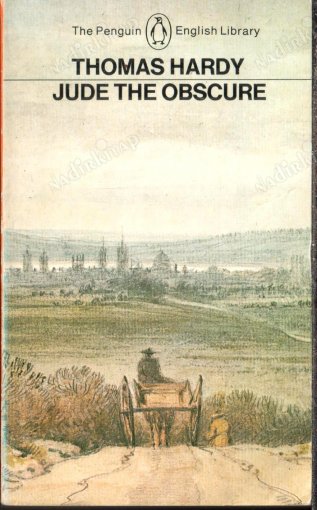
This was the first book I was assigned to read during my year of college at the University of Missouri. I reread this in honor of Anfer attending Mizzou earlier this fall. It was scandalous in its day as it questioned a number of social norms. It also contains one of the most jarring scenes I've encountered in the pages of a book. But plenty of beautiful passages and thought provoking material to carry the day.
At some time near two o’clock, when he was beginning to sleep more soundly, he was aroused by a shrill squeak that had been familiar enough to him when he lived regularly at Marygreen. It was the cry of a rabbit caught in a gin. As was the little creature’s habit, it did not soon repeat its cry; and probably would not do so more than once or twice; but would remain bearing its torture till the morrow when the trapper would come and knock it on the head.
He who in his childhood had saved the lives of the earthworms now began to picture the agonies of the rabbit from its lacerated leg. If it were a “bad catch” by the hind-leg, the animal would tug during the ensuing six hours till the iron teeth of the trap had stripped the leg-bone of its flesh, when, should a weak-springed instrument enable it to escape, it would die in the fields from the mortification of the limb. If it were a “good catch,” namely, by the fore-leg, the bone would be broken and the limb nearly torn in two in attempts at an impossible escape.
Almost half an hour passed, and the rabbit repeated its cry. Jude could rest no longer till he had put it out of its pain, so dressing himself quickly he descended, and by the light of the moon went across the green in the direction of the sound. He reached the hedge bordering the widow’s garden, when he stood still. The faint click of the trap as dragged about by the writhing animal guided him now, and reaching the spot he struck the rabbit on the back of the neck with the side of his palm, and it stretched itself out dead.
The beggarly question of parentage—what is it, after all? What does it matter, when you come to think of it, whether a child is yours by blood or not? All the little ones of our time are collectively the children of us adults of the time, and entitled to our general care. That excessive regard of parents for their own children, and their dislike of other people’s, is, like class-feeling, patriotism, save-your-own-soul-ism, and other virtues, a mean exclusiveness at bottom.”
Sue jumped up and kissed Jude with passionate devotion. “Yes—so it is, dearest! And we’ll have him here! And if he isn’t yours it makes it all the better. I do hope he isn’t—though perhaps I ought not to feel quite that! If he isn’t, I should like so much for us to have him as an adopted child!”
Sue sat looking at the bare floor of the room, the house being little more than an old intramural cottage, and then she regarded the scene outside the uncurtained window. At some distance opposite, the outer walls of Sarcophagus College—silent, black, and windowless—threw their four centuries of gloom, bigotry, and decay into the little room she occupied, shutting out the moonlight by night and the sun by day. The outlines of Rubric College also were discernible beyond the other, and the tower of a third farther off still. She thought of the strange operation of a simple-minded man’s ruling passion, that it should have led Jude, who loved her and the children so tenderly, to place them here in this depressing purlieu, because he was still haunted by his dream. Even now he did not distinctly hear the freezing negative that those scholared walls had echoed to his desire.